
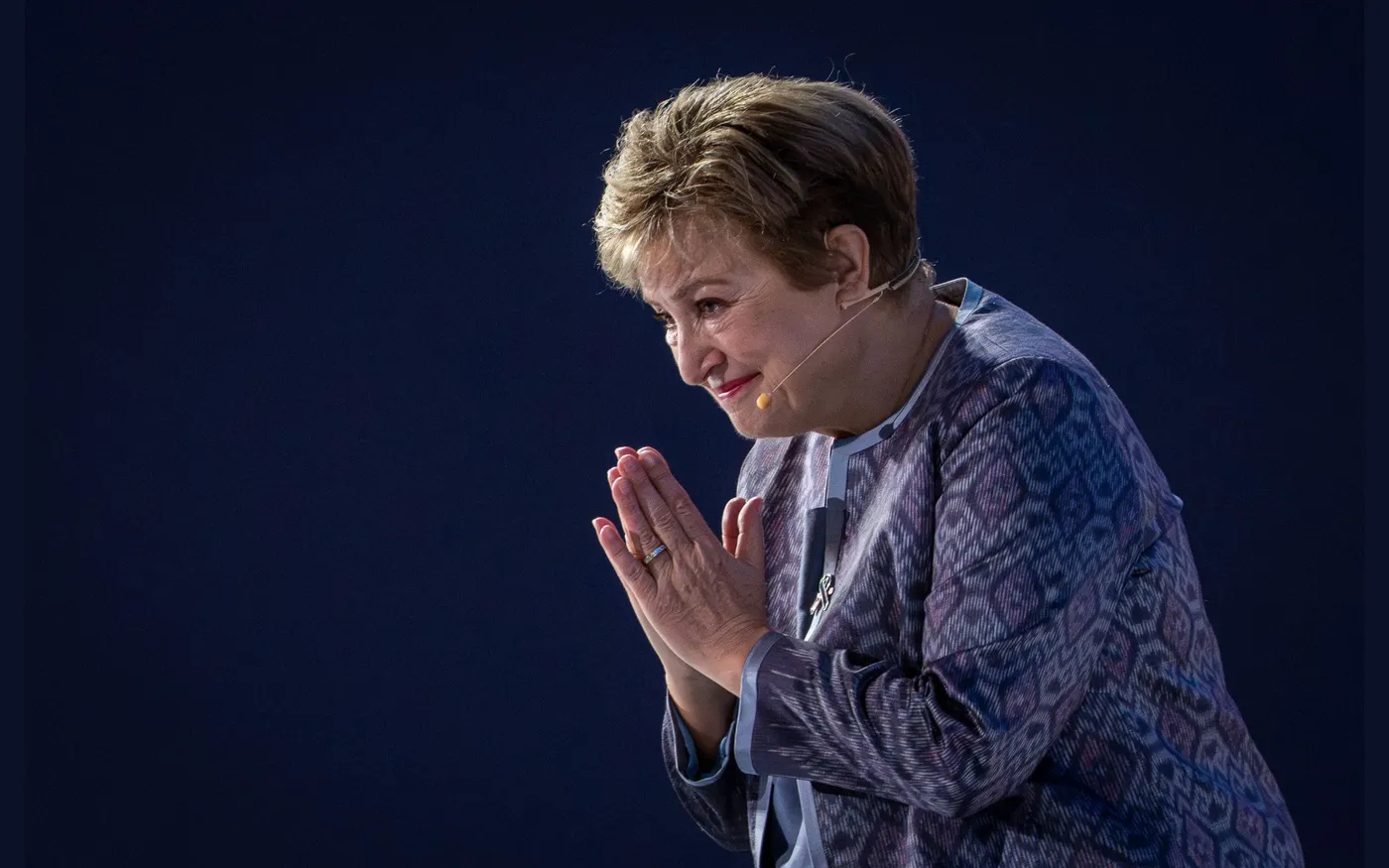
When International Monetary Fund (IMF) Managing Director Kristalina Georgieva appeared at the 2026 IMF and World Bank Group Annual Meetings in Bangkok earlier this month wearing Thai silk, she did much more than make a sartorial statement.
She demonstrated how leaders can make even the most complex global institutions feel more human, accessible and connected to the communities they serve.
Throughout the week, Kristalina Georgieva wore Thai silk in recognition of Thailand’s cultural heritage and the legacy of Queen Sirikit, the Queen Mother, who championed the fabric internationally. By the end of the meetings, Georgieva joked that she had arrived in Bangkok as head of the IMF and was proud to leave as an “ambassador of Thai silk”.
But this was about much more than clothes.
Georgieva consistently connected the IMF’s global agenda with the country hosting it. She referenced the late King Bhumibol Adulyadej’s teaching that positive outcomes must be cultivated and strengthened over time, saying the IMF would take those words back to Washington as inspiration for its work.
Her appreciation of Thai culture, food and hospitality provided a human counterpoint to conversations about fiscal policy, economic growth and the other weighty issues occupying delegates.
For corporate communications professionals, there are some valuable lessons.
1. Human leadership builds connection
Formal speeches, press releases and media conferences remain important. But on their own, they can create distance between leaders and the people they are trying to reach. Showing more of the person behind the title can help bridge that gap. Warmth, curiosity and genuine engagement with people and place can make a leader, and by extension their organisation, feel more accessible. The important word here is genuine. Cultural engagement works when it feels like appreciation rather than performance.
2. Local relevance makes global stories matter
The IMF Annual Meetings deal with issues of enormous global consequence. Yet Georgieva also gave Thai audiences a reason to connect with the event on a personal level. Her embrace of Thai silk was particularly resonant because it acknowledged a cultural tradition closely associated with Queen Sirikit, the Queen Mother, while her references to King Bhumibol connected the IMF’s work with ideas familiar to Thai audiences. Georgieva said Thailand’s hospitality had helped create the environment for productive discussions. For communicators, the lesson is simple: global messages become more powerful when they are grounded in local meaning.
3. Executive communication doesn't always need a lectern
An important leadership message no longer has to begin with a keynote speech. Social media gives leaders the opportunity to communicate differently: shorter, more personal and in the moment. Georgieva used her own social channels to share her appreciation of Thai silk, extending the story of the meetings well beyond formal IMF communications. For complex organisations, that matters. A person may never read a policy paper or watch an hour-long press conference. A short social post or video may be their first encounter with the organisation. It doesn't replace substantive communication. It creates the invitation to engage with it.
From institution to individual
Like many Thai’s, I have joined the Kristalina Georgieva fan club.
What I find most interesting is that this isn't really a story about Thai silk. It is about reducing the distance between institutions and people. The IMF deals with some of the biggest and most complex issues facing the global economy. Yet for a week in Bangkok, its Managing Director found ways to connect that work with Thai culture, history and everyday life. Suddenly, an institution such as the IMF can feel a little less remote.
And I’ll certainly be following to see what comes next from Thailand’s newest ambassador for Thai silk.
Photo credit: Official 2026 IMF-World Bank Group annual meeting gallery https://www.am2026thailand.go.th/photo-gallery


